-COELACANTH: Genome Analysis & Insights from a Living Fossil

-COELACANTH! Great article on a recently published study on the coelacanth! The genome of this “living fossil” was recently sequenced and analyzed to investigate questions about the vertebrate water-land transition (adaptations from water-to-land) and comparative rates of genome evolution. The coelacanth was shown to have extremely slow rates of change in its genome, and comparative analysis of the lungfish showed that the lungfish is the closest ancestor of the tetrapods.–

LINKS:

PhysOrg Summary

http://phys.org/news/2013-04-coelacanth-genome-surfaces-unexpected-insights.html

Full journal article from Nature

http://www.nature.com/nature/journal/v496/n7445/pdf/nature12027.pdf

-Phase 3, 4, and 5: formalin, dry, instaGARm–

Apologies for the lack of updates on this project and many others, things have been quite hectic over the past couple months with new research projects, a job transition, and more.  Here is the semi-final stage of the alligator gar head project, and it will remain at this stage for a while until some other pieces of the final project can be brought together.  After defrosting the gar and prying the jaws open, it was preserved in a bucket of formalin for several days.  Once formalin preservation was complete, the head was removed and soaked in water for approximately 24 hours (to reduce amount of formalin).  Finally, the head was dried by sitting in the sun/air-dried for several days.  The final product is what you see here; the photo was taken with Instagram, which I have been experimenting with with several primitive fishes as subjects…album coming soon; and you can see some other photos on our facebook page.–

-Phase 2: “Thawed Jaws”–

-In continuation of the alligator gar head/skull project, here are some photos of phase 2.  The head has completely thawed, which causes the muscles and joints to relax and allows for the jaws to be opened (not without some prying however).  The following series of photos shows various shots of the thawed alligator gar head before entering phase 3.

Here is a shot of the fully thawed head:

A posterior shot of the head, showing muscle, nerve, and bone detail:

Dorsal shot of the head; note the distinct bony plates comprising the skull:

A shot of the head with jaws pried open; note the prominent secondary row of teeth in the upper jaw, which is characteristic of the genus Atractosteus:

Straight into the mouth of the beast. Note the rounded forked tongue; the indentation allows for adjustment of prey fishes to go down head first:

For scale (no pun intended!) you can compare to the size of my hand:

Will continue with updates for phase 3 in the near future!–

“Gar de Frost”

-Following the recent buzz over the giant alligator gar caught in Texas (see previous post) and finally having a small portion of free time while preparing the lab for more gar work, I decided to begin a small project I’ve had on the table (or in the freezer) for a couple years now.  Phase 1 is defrosting a ~14″-long alligator gar (Atractosteus spatula) head which I acquired from colleagues while visiting Nicholls State in Lousiana back in 2010.  I’ll do my best to keep an ongoing update on the project…for now I’m hoping this head will defrost properly over the next couple days before Phase 2!–

-GARgantuan Alligator Gar (98″, +300 lbs) Bowfished in Texas–

-NOTE: I originally made this post on LEPISOSTEIDAE.net, however, a gar of this size definitely deserves some extra attention!–

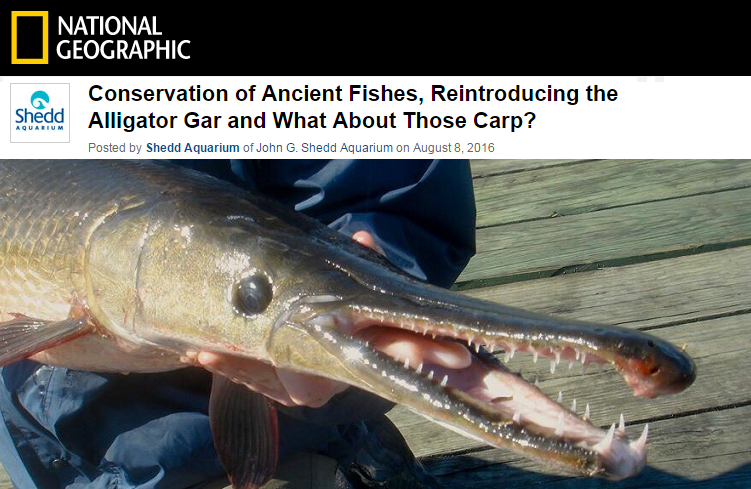
-See photo and link for the story of a giant alligator gar (Atractosteus spatula) that was recently bowfished in Texas. This alligator gar is one of the largest in recent history (over 8′ long and over 300 lbs), even though an accurate weight could not be determined. Information is not provided as to whether or not the large female gator gar had already spawned by the time of capture (it was bowfished out of a spawning group); it would be unfortunate to lose those good genes from the pool. It would also be interesting to analyze aging structures (otoliths, scales) from the individual to determine how old this fish was (alligator gars have been aged to over 70 years). This fish at least gives hope that there are still monster alligator gars still out there…and hopefully those beasts are able to evade capture for many more years.

Original article from Caller.com

GrindTV article

-Aquaculture of Tropical Gars in Mexico–

In anticipation of my upcoming trip to Villahermosa (Tabasco state, Mexico), here is a great video put together by colleagues at the tropical gar aquaculture farm (Otot-Ibam) highlighting their gar production.  Great shots/sequences of gar development and the culture process.  I’ll be presenting at the 4th International Meeting on Lepisosteid Research in mid-June, and we’ll get to tour the farm as well as participate in workshops.

Tropical gar (Atractosteus tropicus) Aquaculture

-Successful Captive Spawning of Alligator Gars–

Research on alligator gars at Nicholls State University & LSU

Students (from left) Paige O’Malley, Matthew Moroney and Courtney Stauderman remove an alligator gar from a holding tank at the LSU AgCenter Aquaculture Research Station in Baton Rouge. The gar were spawned in holding tanks as part of a research project studying methods of rearing the fish in captivity.
Photo: Craig Gautreaux/LSU AgCenter

-Xanthic/Melanistic Bowfin!–

-via Sara Strassman & Upper Mississippi River Conservation Committee

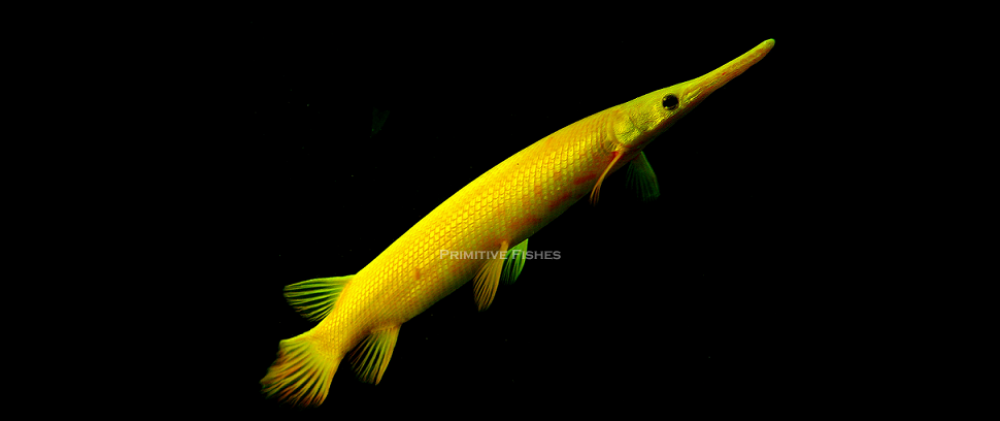
This is an example of a combination of unusual genetic conditions expressed in fishes and other organisms.  Xanthochroism is a condition where all pigments other than yellow and orange are absent or minimally expressed.  Melanism is an excess of dark pigmentation.  This fish is a combination of the two conditions; it has previously been observed in gars, and the combination of colors seems to be most apparent during spawning season.

Welcome to Primitive Fishes!

This site is dedicated to the ecology, natural history, and conservation of primitive bony fishes: the lungfishes, bichirs, sturgeons, paddlefishes, gars, and bowfin.

The site is continuously being updated and currently being transitioned from the older site version.  Profiles on each species, more photos, and additional information will be added soon.

Thanks for visiting!

~Solomon David (E_americanus)

Solomon R David, PhD
Postdoctoral Research Fellow
School of Natural Resources & Environment
University of Michigan